

January is more than a calendar reset. For property owners and managers in Austin and Central Texas, it is the best time to step back, assess pavement conditions, and plan before problems grow and schedules tighten. Winter’s relatively mild weather gives us a unique opportunity to inspect asphalt surfaces, identify early signs of wear, and map out paving and maintenance projects before spring demand ramps up. With fresh budgets and fewer logistical pressures, planning now helps avoid rushed decisions, unexpected costs, and disruptions later in the year.
Rather than waiting for cracks to widen or potholes to multiply, winter planning allows us to take a proactive approach. By evaluating pavement conditions early and setting realistic timelines, we can stabilize surfaces, prioritize repairs, and prepare for larger projects when conditions are ideal. That foresight leads to smoother execution, better coordination, and longer-lasting pavement throughout the year.
Why January Is a Smart Time to Plan Asphalt Projects
January is one of the most strategic months to plan asphalt paving and maintenance projects. Budgets are newly approved, capital plans are taking shape, and schedules are more flexible than they will be in peak paving season. This early window allows us to align scope, timing, and resources without competing for contractor availability or materials.
Planning in January also gives us time to evaluate the full picture. We review traffic patterns, drainage behavior, access points, and staging needs while sites are less congested. This makes it easier to design efficient work plans that minimize disruption once crews are mobilized. By locking in quantities and specifications early, we reduce the risk of supply delays and last-minute changes that often drive costs higher in spring and summer.
When projects are planned early, the entire process becomes more predictable. That means clearer budgets, tighter schedules, and fewer surprises once work begins.
Common Asphalt Issues to Look for at the Start of the Year
Winter conditions tend to reveal problems that were less noticeable during warmer months. Temperature swings and moisture exposure can make pavement distress easier to spot, which is why January inspections are so valuable.
Cracking is often the first sign of trouble. Long cracks, block patterns, or interconnected cracking usually indicate movement within the pavement or stress from traffic loads. Surface wear, such as raveling, polished aggregates, or faded striping, points to aging asphalt and binder breakdown. After rainfall, drainage issues become more visible. Ponding water along curbs or in low areas accelerates deterioration and often signals the need for grading or drainage corrections.
Potholes are another common winter discovery. Even small potholes suggest moisture intrusion and underlying weakness that should be addressed before they expand. Rutting, shoving, or uneven surfaces also deserve attention, as they affect safety and ride quality. Documenting these conditions early helps us prioritize repairs and select the most effective solutions.
Can Asphalt Work Be Done During Winter in Central Texas?

Central Texas winters are far more forgiving than those in colder regions, which allows for targeted asphalt work throughout much of the season. That said, winter paving requires thoughtful planning and realistic expectations. Certain services can be performed during dry, mild conditions, while others are better scheduled once temperatures stabilize.
During winter, we can often complete crack sealing, pothole repairs, spot leveling, drainage corrections, and restriping. These services help stabilize pavement and prevent further damage while preparing surfaces for future work. Larger paving projects or full-depth installations may need to wait for consistently warmer conditions to ensure proper compaction and curing.
The key advantage of winter is not rushing into work, but preparing for it. Inspections, evaluations, and planning conducted now ensure that once the paving window opens, projects move forward efficiently and with confidence.
Benefits of Planning Paving Projects Early
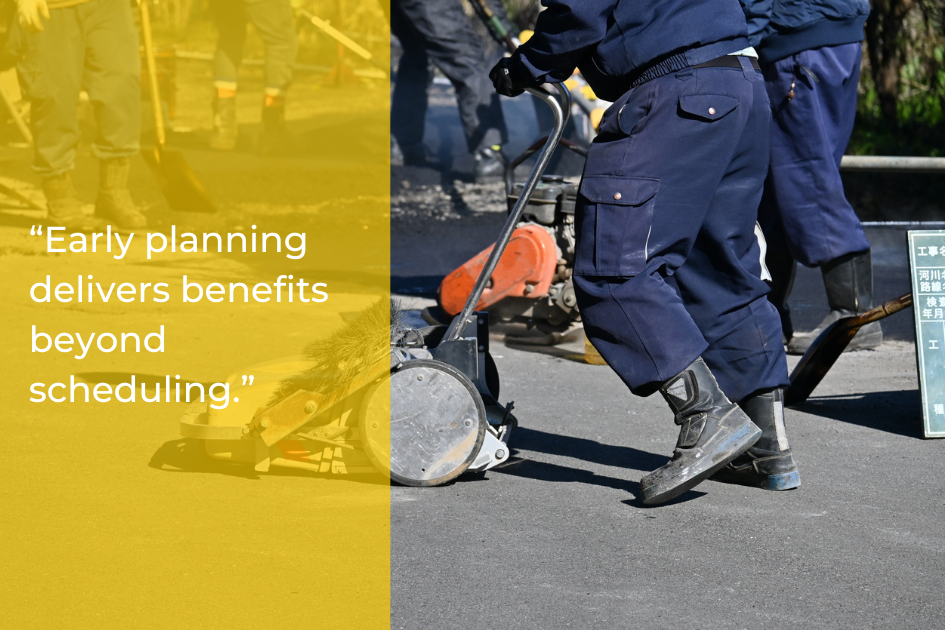
Early planning delivers benefits that extend well beyond scheduling. One of the biggest advantages is control. When projects are scoped early, we can determine whether full paving, resurfacing, or targeted repairs provide the best long-term value. That kind of lifecycle thinking helps avoid unnecessary work while maximizing pavement performance.
Planning also improves coordination. When paving, sealcoating, and striping are sequenced properly, we reduce mobilizations, limit downtime, and keep sites accessible. Early planning lowers the risk of emergency repairs later in the year, which are often more disruptive and costly. By identifying priorities now, we can phase work logically and allocate resources efficiently.
In short, early planning turns pavement management from a reactive expense into a strategic investment.
Services to Consider When Planning for the Year Ahead
With a clear plan in place, January is the right time to evaluate which services will best support pavement performance throughout the year.
Asphalt paving may be needed for new driveways, private roads, or parking lots where surfaces have reached the end of their useful life. For aging pavement, resurfacing options such as overlays can restore smoothness and extend service life without full replacement. Crack sealing and pothole repair help stop water intrusion and prevent small defects from becoming structural failures.
Sealcoating plays a critical role in protecting asphalt before summer heat accelerates oxidation. Planning sealcoating early ensures surfaces are ready at the right time. Parking lot striping and ADA compliance updates improve safety, organization, and appearance. Drainage evaluations round out the plan by addressing one of the most common causes of premature pavement failure.
Who Benefits Most From January Planning
January planning benefits a wide range of property types, but certain groups see especially strong returns.
Commercial property owners and managers benefit from aligning paving schedules with business operations and traffic patterns. Retail centers and office parks can schedule work ahead of busy seasons, reducing disruptions. HOAs and residential communities gain consistency through phased budgeting and coordinated improvements that minimize inconvenience for residents.
Schools, churches, and municipal properties often operate on fixed calendars. Early planning allows paving projects to align with breaks, permitting timelines, and procurement cycles. In each case, early scoping clarifies quantities, access needs, and drainage solutions, helping projects stay on track and within budget.
Why Choose a Local Austin Paving Contractor
Pavement performance in Central Texas depends heavily on local knowledge. Climate conditions, soil behavior, traffic patterns, and seasonal timing all influence how asphalt performs over time. A local Austin paving contractor understands these variables and applies that insight to every project.
Working with a local team means schedules are coordinated around community events, school zones, and traffic flows. Mix designs and compaction methods are selected with local conditions in mind. As a locally owned and operated company, Bennett Paving brings that regional expertise to every job, along with a commitment to quality, transparency, and long-term relationships.
Choosing a local contractor is not just about proximity. It is about accountability, responsiveness, and results that hold up in real-world conditions.
Conclusion
January is the ideal time to take control of your pavement strategy. Winter’s mild conditions allow us to inspect surfaces, identify emerging issues, and plan repairs and improvements before spring demand peaks. By addressing cracks, drainage concerns, and surface wear early, we extend pavement life, manage costs, and keep traffic moving smoothly throughout the year. Early coordination also secures schedules, materials, and permits, turning planning into performance.
If you are ready to start the year with clarity and confidence, Bennett Paving is here to help. Our team works with property owners throughout Austin and Central Texas to evaluate pavement conditions, prioritize needs, and plan projects that deliver lasting value. Contact Bennett Paving today to schedule an evaluation and take the first step toward smoother, more durable pavement all year long.
