
Austin winters are mild by most standards, but don’t let that lull you into skipping fall maintenance on your asphalt. A couple of hard freezes, some heavy rain, and weeks of temperature swings are all it takes to turn a surface with minor wear into one with serious structural problems. Fall is the ideal time to get ahead of all of it, and the window to do it right is shorter than most property owners realize.
Fall Is the Best Time to Address Your Asphalt – Here’s Why
Why summer leaves your pavement more vulnerable than it looks
By the time September rolls around, your asphalt has just endured months of intense Central Texas heat. UV exposure breaks down the surface binder, high temperatures cause the material to expand and contract repeatedly, and vehicle fluids bake into unprotected pavement all summer long. The damage from all of this isn’t always obvious right away, but it leaves the surface more brittle and more vulnerable to cracking than it was in the spring. Fall is when that accumulated wear starts showing up, and it’s the best time to catch it before winter makes it significantly worse.
The narrow window between summer heat and winter freeze
There’s a sweet spot in the fall calendar that most property owners miss. Temperatures are cool enough for sealants and repair materials to adhere properly, the rainy season hasn’t fully set in, and there’s still enough dry weather to allow treatments to cure before the first freeze arrives. Once temperatures start dropping consistently into the low 40s at night, the window for effective maintenance starts to close. Acting in September or October puts you well ahead of that cutoff.
Start with a Full Visual Inspection
What to look for when walking your property
Before calling a contractor, it’s worth doing your own walkthrough so you have a clear picture of where things stand. Look for surface cracks, both hairline and wider, as well as any areas where the asphalt has started to crumble or lose its aggregate. Check for low spots or depressions where water pools after rain, scan the edges of the pavement for deterioration, and note any areas where the surface looks faded, gray, or chalky. Take photos if you can. It gives a contractor a starting point and helps you track changes over time.
The difference between surface wear and damage that needs professional attention
Not everything you find during a walkthrough requires immediate professional repair. General fading and minor surface roughness are normal signs of aging and can usually be addressed with seal coating. What warrants a professional assessment is anything structural: cracks that are wide or deep, areas where the asphalt feels soft or spongy underfoot, sections where the surface has separated or shifted, or anywhere potholes are beginning to form. These are signs that the problem has moved beyond the surface layer, and patching alone won’t solve it.
Take Care of Cracks Before Temperatures Drop
Why fall crack sealing is more effective than waiting until spring
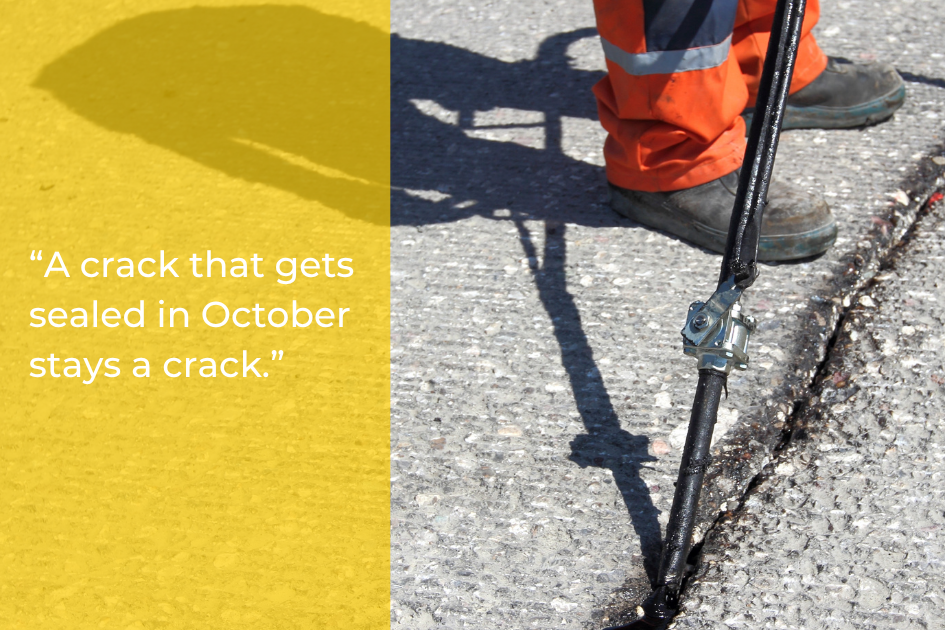
Crack sealing in the fall is significantly more effective than waiting until spring, and the reason comes down to timing. Sealant materials bond better in cooler, stable temperatures than in the heat of summer or the unpredictability of early spring. More importantly, sealing cracks before winter prevents the damage that would otherwise happen over the next several months. A crack that gets sealed in October stays a crack. One that goes into winter unsealed is likely to be a much larger problem by February.
How water in unsealed cracks behaves during a Central Texas freeze
Central Texas doesn’t freeze often, but when it does, unsealed cracks take a hit. Water that has settled into surface cracks expands when it freezes, pushing the edges of the crack apart and widening the opening. When it thaws, the loosened material shifts. Repeat that cycle a few times over a wet winter and a hairline crack can become a significant fissure. This is especially damaging to the base layer if water has worked its way deep enough, because the same freeze-thaw process weakens the foundation and accelerates the path toward potholes and structural failure.
Schedule Seal Coating Before the Season Closes
Why fall is one of the best times of year to seal coat in Central Texas
Fall is genuinely one of the best times to seal coat in this region, and it comes down to the conditions. Sealant needs moderate temperatures to cure properly, ideally between 50 and 85 degrees, and Central Texas fall weather sits right in that range for much of September and October. The lower humidity compared to spring also helps the product adhere and dry more evenly. A seal coat applied in good fall conditions will cure thoroughly before winter arrives, giving the surface a full protective layer going into the harshest stretch of the year.
Temperature and weather conditions that make sealcoating work better
Beyond temperature, a few other conditions affect how well a seal coat performs. The surface should be dry for at least 24 hours before application, and there should be no rain expected for a full day after. Avoid scheduling seal coating on windy days, since uneven application leads to thin spots that wear out faster. A professional crew will account for all of this and schedule the work around conditions, but if you’re timing your request, mid-morning on a clear, calm fall day is the ideal window.
Check Your Parking Lot Striping Before the Holiday Rush
Why faded lines become a bigger problem when lots get busier
For commercial property owners, fall is the time to look at your striping before holiday traffic picks up. Faded parking lot lines that are manageable when the lot is half full become a real problem when every space is in use. Drivers can’t easily tell where spaces begin and end, traffic flow gets chaotic, and the risk of minor accidents in the lot increases. Clear, fresh striping keeps things organized and moving efficiently, which matters a lot more during the busy months of November and December.
ADA compliance and why fall is the right time to address it
Faded accessible parking markings are more than an aesthetic issue. Under ADA requirements, handicap zones need to be clearly marked and properly maintained, and a faded or deteriorated space could expose property owners to complaints or fines. Fall is the right time to get this addressed because re-striping can be paired with other maintenance work already scheduled, minimizing disruption and cost. Getting it done now also means you’re covered before the end of the year, which is when property compliance reviews tend to happen.
Don’t Let Small Potholes Survive the Winter
How cold weather and rain turn minor potholes into major damage
A small pothole heading into fall is a manageable repair. That same pothole after a Central Texas winter is a different story. Rain fills the void with water, which weakens the surrounding asphalt and the base layer beneath it. When a freeze comes through, that water expands and pushes the damage outward. By the time spring arrives, what was a minor depression has often grown into a much larger, deeper failure that requires significantly more material and labor to fix properly.
Why patching now is far cheaper than repairing in spring
Pothole repair in the fall is straightforward and relatively inexpensive when caught early. The surrounding asphalt is still stable, the base layer is intact, and the repair holds well in cool, dry conditions. Waiting until spring means repairing not just the original pothole but the additional damage that accumulated around it over winter. It’s one of those situations where the cost of acting now is a fraction of the cost of waiting, and the repair lasts longer too because you’re fixing a smaller, cleaner problem.
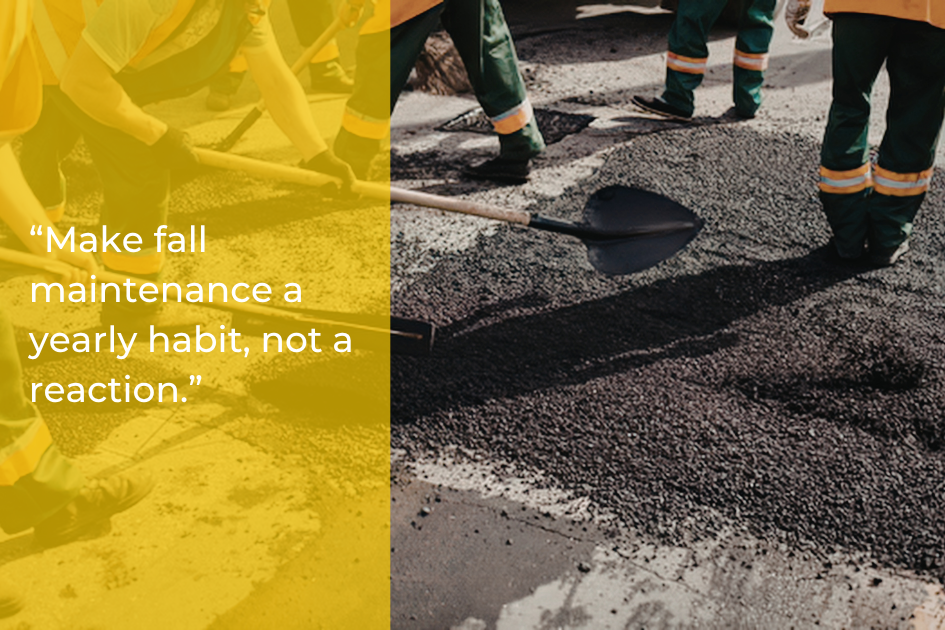
Make Fall Maintenance a Yearly Habit, Not a Reaction
Building a simple annual maintenance routine for your property
The property owners who spend the least on asphalt over time are usually the ones who treat maintenance as a scheduled habit rather than a response to visible damage. A simple yearly rhythm looks something like this: inspect in early fall, seal coat every two to three years, crack seal as needed, re-stripe when lines start fading, and address any potholes before winter. That’s it. The whole routine is far less expensive than a single major repair, and it keeps your surface looking and performing well for years longer than a neglected one would.
How proactive care keeps repair costs predictable and manageable
One of the hidden benefits of regular maintenance is financial predictability. When you’re on a maintenance schedule, you’re budgeting for known, routine services rather than scrambling to cover unexpected repair costs. A surprise resurfacing or base repair can run several times the cost of years of routine maintenance. Staying ahead of the damage keeps those surprises off the table and gives you a surface that holds up reliably year after year.
Get Your Asphalt Ready Before Winter Arrives
Why fall bookings fill up faster than most property owners expect
Fall is a busy season for paving contractors in Central Texas. Property owners, property managers, and commercial clients all tend to realize around the same time that winter is coming and maintenance needs to happen. Availability fills up faster than people expect, particularly for seal coating, which has a weather window that closes once temperatures drop consistently. If you wait until late October to start making calls, you may find yourself pushed into a timeline that doesn’t leave enough curing time before the first freeze.
Schedule your assessment with Bennett Paving today
If your asphalt hasn’t been assessed recently, fall is the right time to get eyes on it. Bennett Paving’s team serves Austin and all of Central Texas and can evaluate the condition of your surface, identify what maintenance makes sense this season, and get you scheduled before the window closes. Whether you need crack sealing, seal coating, pothole repair, re-striping, or a combination of services, acting now is always better than waiting until the damage gets ahead of you. Reach out to Bennett Paving for a free quote and get your property ready before winter arrives.
