
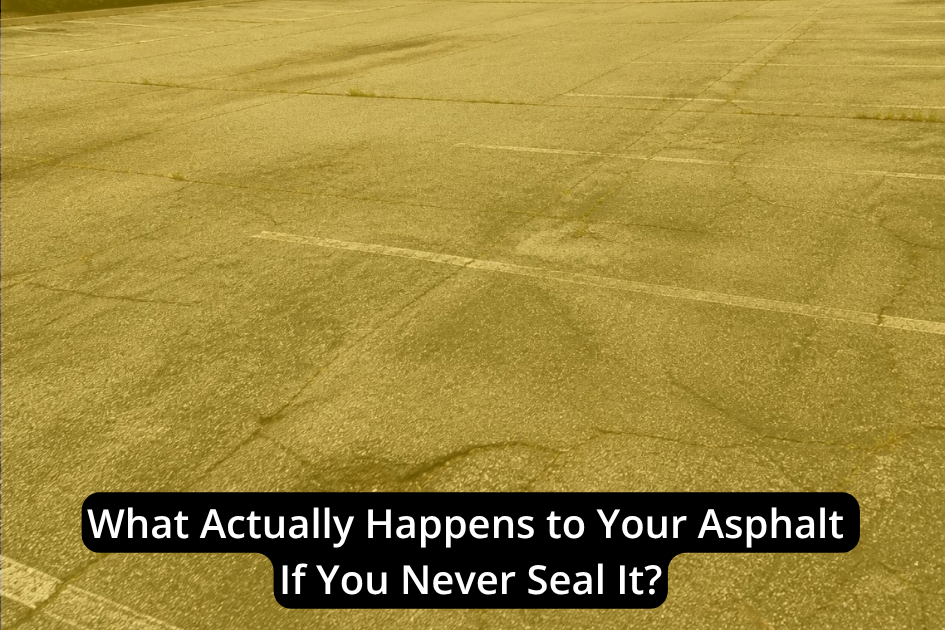
Most people only think about sealing their asphalt when something already looks wrong. A crack appears, the surface starts looking gray and rough, or a pothole forms overnight. By that point, the damage has usually been building for months or even years. Sealcoating is one of those maintenance tasks that’s easy to push to next season, then the season after that, until eventually you’re not dealing with a maintenance issue anymore. You’re dealing with a repair bill. Here’s what’s actually happening to your asphalt every day you go without it.
Most Property Owners Don’t Think About Sealing Until It’s Too Late
Why asphalt looks fine until it suddenly doesn’t
Asphalt is deceptive. It can look perfectly solid on the surface while quietly breaking down underneath, and by the time visible problems appear, the damage is already well along. This is especially true in Central Texas, where the combination of intense heat, UV exposure, and unpredictable rain creates conditions that accelerate asphalt deterioration faster than most property owners expect. What looks like a surface in decent shape today can shift quickly once water finds its way in.
The slow, invisible damage happening under the surface
The deterioration of unsealed asphalt doesn’t happen all at once. Moisture seeps into hairline cracks too small to notice, the binder holding the asphalt together starts breaking down from UV exposure, and the base layer slowly loses its ability to support the weight above it. None of this is visible from the surface until it’s already a significant problem. Regular sealing stops this process at the source, long before you’d ever know damage was occurring.
What Sealcoating Actually Does (And Why Skipping It Is a Gamble)
How sealcoat acts as a barrier between your asphalt and everything trying to destroy it
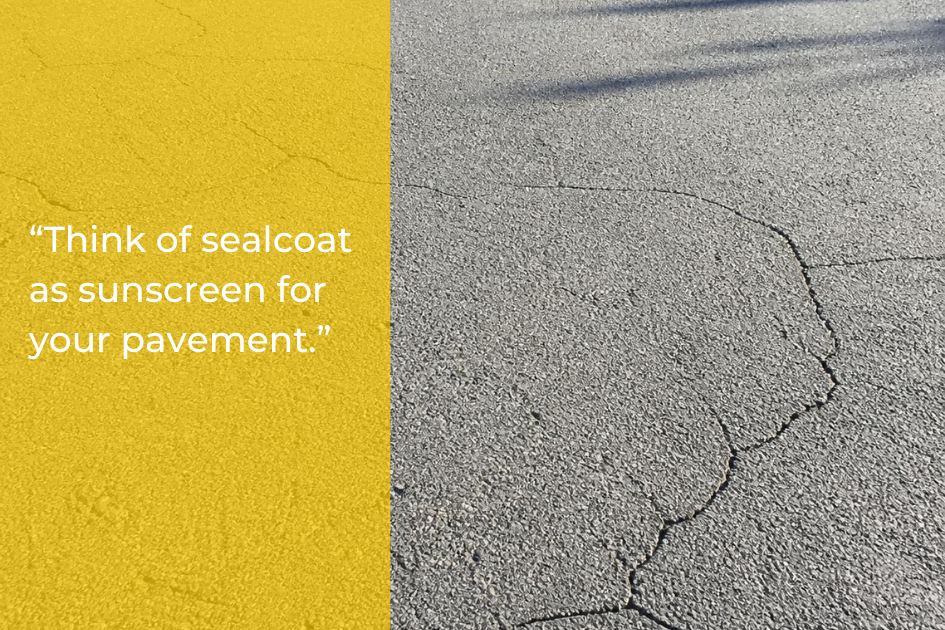
Think of sealcoat as sunscreen for your pavement. It creates a protective layer over the asphalt surface that blocks UV rays, repels water, and resists damage from vehicle fluids like oil and fuel that would otherwise soften and degrade the material. Without it, your asphalt is an open surface exposed to everything the environment throws at it. With it, the underlying material stays protected and flexible, which is what allows asphalt to hold up under traffic and temperature changes year after year.
What your pavement is exposed to every single day in Central Texas
Pavement in Austin and Central Texas takes a beating that most people underestimate. The summer sun pushes surface temperatures well above the air temperature, accelerating oxidation. Heavy rain follows drought, sending water directly into any surface weakness. Vehicles leak oil and fluid that slowly eat through unprotected asphalt. And the region’s temperature swings, from scorching summers to occasional hard freezes, cause constant expansion and contraction. Unsealed asphalt absorbs all of this. Sealed asphalt deflects most of it.
Stage 1 — Your Asphalt Starts Oxidizing and Fading
What oxidation does to asphalt binder over time
Fresh asphalt is black because the binder, the material that holds all the aggregate together, is rich with oils that keep it flexible and durable. Over time, oxygen breaks down those oils through a process called oxidation. As the binder loses its flexibility, the asphalt becomes rigid and brittle. You’ll notice this first as a color change, the surface turning from deep black to gray, then to a faded, almost chalky appearance. That color shift isn’t just cosmetic. It’s a sign that the material underneath has lost a significant amount of its structural flexibility and is now far more vulnerable to cracking.
Why Austin’s UV intensity speeds this process up dramatically
Oxidation happens everywhere, but in Austin it happens faster. The intensity and duration of UV exposure in Central Texas is among the highest in the country, and that radiation breaks down asphalt binder at an accelerated rate compared to more temperate climates. What might take five or six years to develop in a cooler region can show up in two or three years here. That’s why the standard sealing timeline that works elsewhere sometimes isn’t enough for Central Texas pavement, and why property owners in this region need to be more proactive about maintenance than the general advice suggests.
Stage 2 — Cracks Begin to Form, and Water Gets In
How surface cracks develop from UV exposure and temperature swings
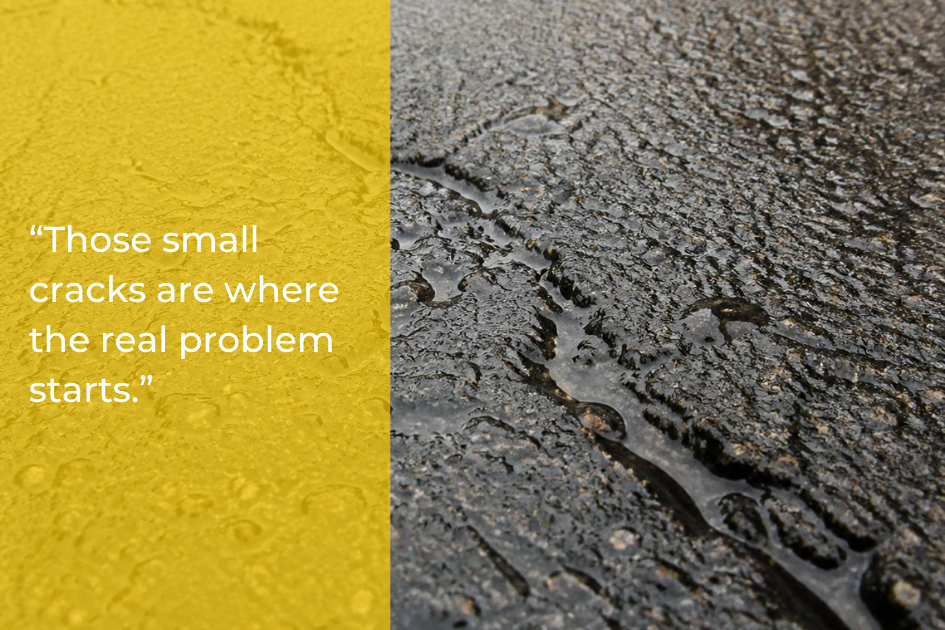
Once the binder loses its flexibility from oxidation, the asphalt can no longer absorb the natural movement that comes with temperature changes. As the surface heats up and expands during the day, then cools and contracts at night, those brittle areas begin to fracture. At first you’ll see hairline cracks, almost too small to worry about. But those small cracks are where the real problem starts, because they give water a direct path into the structure below.
Why water infiltration is the real enemy of your pavement’s foundation
Surface cracks are a nuisance. Water getting through those cracks is a disaster. Once moisture reaches the base layer beneath the asphalt, it begins softening the material that the pavement relies on for support. In Central Texas, where summer rainstorms can be intense and sudden, a cracked surface can absorb a significant amount of water in a short period of time. That trapped moisture weakens the foundation, and now the pavement above has lost a meaningful portion of its structural support. This is the point where small problems start becoming large ones.
Stage 3 — The Damage Goes Deeper Than the Surface
What happens to the base layer when water sits underneath
When water saturates the base layer, the soil beneath the asphalt loses its load-bearing capacity. This leads to voids, areas where the base material has eroded or shifted and no longer supports the pavement above it. Traffic pressing down on unsupported asphalt causes the surface to flex and crack further. On hot days, the combination of weakened structure and high temperature makes the asphalt especially vulnerable to rutting and sinking. What started as a surface issue is now a foundational one.
How structural failure develops and why it’s expensive to fix
Structural failure in asphalt doesn’t announce itself. It builds slowly until the surface reaches a tipping point, and then the deterioration can seem to happen fast. Widespread alligator cracking, large potholes, and sections of pavement that are visibly sinking or separating are all signs that the base layer has been compromised. At this stage, patching doesn’t solve the problem because the issue isn’t the surface anymore. It’s what’s underneath. Repairs at this stage typically require removing and replacing the base material along with the asphalt above it, which is a significantly more involved and expensive process than any amount of routine sealing would have been.
Stage 4 — You’re Now Looking at Resurfacing or Full Replacement
At what point repair is no longer enough
There’s a general threshold in the paving industry where repair stops making sense and resurfacing or replacement becomes the smarter investment. When cracking covers a significant portion of the surface, when potholes keep forming in the same areas, when the surface is losing aggregate and becoming rough and loose, or when water consistently pools after rain, those are signs that the pavement is past the point of simple maintenance. A professional assessment can help determine where your asphalt falls on that spectrum, but if you’re seeing multiple issues at once, replacement is likely the more economical long-term option.
The difference between sealing regularly vs. facing full replacement
Routine seal coating is one of the lowest-cost maintenance investments a property owner can make relative to what it prevents. A full asphalt replacement costs many times more than years of preventive sealing combined. The math is straightforward: seal regularly and extend your pavement’s life by years, or skip it and accelerate toward a full replacement on a much shorter timeline. Sealing doesn’t just protect the surface; it protects the investment you’ve already made in your property.
How Often Should You Actually Be Sealing Your Asphalt?
The general rule of thumb for driveways vs. parking lots
For residential driveways in Central Texas, sealing every two to three years is generally recommended, though surfaces with heavier exposure to sun or vehicle traffic may benefit from sealing closer to every two years. Commercial parking lots typically see heavier wear and should be sealed on a tighter schedule, often every one to two years depending on usage and condition. These timelines can shift based on the age of the pavement, the original installation quality, and how much sun and traffic the surface sees day to day.
Signs your asphalt is overdue for a seal coat right now
If your asphalt has turned gray or has a faded, chalky appearance, it’s overdue. Visible surface cracks, even small ones, are a clear signal that the binder is drying out and the surface needs protection. Water pooling in areas that used to drain, a rough or crumbling texture, or any signs of alligator cracking all point to a surface that needed attention some time ago. The good news is that catching these signs before the damage reaches the base layer usually means sealing can still do its job. Waiting longer narrows that window.
Don’t Wait Until You Can See the Damage
Why sealing is always cheaper than repairing
Every stage of asphalt deterioration becomes more expensive than the one before it. Sealing a surface in good condition is simple and affordable. Crack sealing a surface with early damage costs more. Patching a surface with moderate damage costs more still. Resurfacing or replacing a structurally compromised surface costs significantly more than all of those combined. Getting ahead of the damage is always the more economical choice, and sealing is the most effective tool for doing that.
Getting a professional assessment from Bennett Paving before it gets worse
If you’re not sure where your asphalt stands, a professional assessment takes the guesswork out of it. Bennett Paving’s team has been working with Austin and Central Texas pavement for nearly two decades and can quickly identify where your surface is in its lifecycle and what it actually needs. Whether your asphalt is due for routine sealing, showing early signs of damage, or needs more involved repair, getting eyes on it sooner rather than later is always the right call. Reach out to Bennett Paving for a free quote and get ahead of the problem before it gets ahead of you.
